Tag Archive for 'hanoi'

So Long and Thanks for All the Fish Sauce

After two very pleasant weeks in Vietnam, we head to Cambodia tomorrow.

In no particular order, here are the top five things from Vietnam that I wish I could take with me:

  1. An endless supply of dragon fruit, mangoes, rambutan, and pineapples. The fruit in Nha Trang may still be the best I have ever eaten.
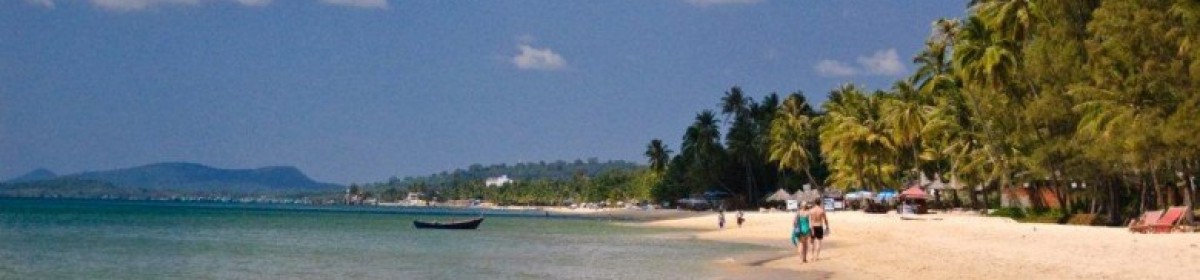
  2. Squeaky sand from Phu Quoc
  3. Nem cua be on the streets in Hanoi (delicious crab spring rolls)
  4. Gordon the Gecko, who was kind enough to share his living space with us at Mai House Resort in Phu Quoc
  5. Chili lemongrass shrimp, especially the rendition at Sea Star

IMG_1526
Our insect-control system on Phu Quoc

Little Vid does Vietnam

As always, the full set of Little Vid photos can be found here. Some of her recent adventures in Vietnam:

DSC_8481
Little Vid looks for answers at the Well of Heavenly Clarity in the Temple of Literature, Hanoi

DSC_8495
Little Vid finds a few friends in the Temple of Literature

DSC_8853
Little Vid relaxing on the beach at Phu Quoc

DSC_8901
Little Vid and Kenny both love long walks on the beach

Lanterns Cooking Class

One of the things I was excited about doing on our return visit to Vietnam was taking a Vietnamese cooking class. When we were in Hanoi, I did a bunch of research on the various options. Most of the ones in Hanoi got mixed reviews,  but there was one in Nha Trang, Lanterns,  that got consistent raves. It was also very reasonable at $14 for a 5 hour class (vs. 2-4 times that price in Hanoi). So this morning we took some time off from beach bumming and arrived at 9AM for our class. There were two other attendees, a nice Swedish couple, so it was a very intimate lesson.

The day began with a cyclo ride to the local market. Though we could have walked to the market in about 15 minutes, it was fun to indulge in our first ever cyclo ride without any haggling involved.

Cyclo ride

When we got to the market our teacher, Lam, gave us a bunch of tips for shopping for ingredients. For example, cucumbers should be dark and not too soft.

Lam showing how to compare carrots
Lam explaining that when buying carrots, you need to look at the core and only get ones with small stems (like the one on the right)

After we purchased rice paper wrappers, sweet soybean sauce, vegetables, fish and chicken, Lam treated us to freshly pressed sugar cane juice.  On our way out we went through the fruit section, where Lam told us how to choose:

  • dragonfruit – the spikes should be poking straight out and the skin should be bright fuschia
  • soursop – the skin shouldn’t be spiky and they shouldn’t be too big
  • mango – there are 3 different types of mangoes in Vietnam. The green ones are the prettiest and the biggest but don’t have much flavor. The yellow-green ones are a little smaller and sweeter. The best (and sweetest) are the smallest, slightly dirty-looking skinned ones. We bought two. :)

We also walked down the “big hunks of meat” section of the market, where Lam purchased some pork for the meat-eaters’ spring rolls. She pointed to some of the more “exotic” pieces on display and explained: “we eat every part of the animal. We don’t waste anything. If part the animal doesn’t taste good, we make it taste good.”

Finally equipped with all of the necessary ingredients, it was back to Lanterns to put on our aprons, roll up our sleeves, and get to work. First course: rice paper rolls.

First we sauteed the shrimp in coconut oil with ginger and shallots, and sliced them in half to make them thin enough for the rolls. Then we prepared the vegetables (shredded carrots, cucumbers sliced lengthwise, lettuce and Thai basil). The last step was the trickiest – assembling the rice paper rolls. Lam demonstrated how to wet the rice paper using a bowl of water and splashing the rice paper with your hand. Then you leave a little bit of rice paper hanging over the lip of the plate, add the veggies, roll partway and add the shrimp so that you can see them on the outside. She also taught us a flower garnish using a tomato top, basil, and hoisin sauce.

Lauren frying shrimp Spring rolls!
Cooking the shrimp and showing off the final product

After a brief intermission to enjoy our spring rolls, it was on to the main course: ginger chicken in clay pot.

The key thing about clay pot dishes is to allow lots of time for marinating and cooking. Usually you marinate the fish (or meat) overnight, and cook it slowly in the clay pot for 8 hours or so. We were on an accelerated schedule, so had to make some small compromises. We started marinating the chicken before embarking on spring rolls. The marination process entails putting garlic and shallots in the clay pot, followed by sliced onions, then chicken, ginger, chilies, and sauce. The sauce ingredients were 1 tbsp fish sauce, 1/2 tbsp sugar, 1 tbsp stock, and 1 tbsp water.

Marinating ginger chicken

Before we put the covered pot on the stove we added water to fill half the pot. After the ingredients cooked (about 20 minutes), we uncovered the pot so that the sauce would reduce and clarify. The richness of the sauce is proportional to the amount it reduces, so you don’t want to rush this step.

Eating ginger chicken
mmmm….ginger….

Lam pulled a Martha Stewart and brought out sliced vegetables and a bowl of steamed rice from the kitchen and we had a leisurely lunch. After some relaxation it was time for dessert: banana spring rolls.

Banana spring rolls are a traditional Vietnamese dessert, though the recipe can be applied to anything from vegetables to fish and chips. First you mix together flour, water, and sugar for the main batter. Then you slice a banana in half, coat it lightly in the batter and drop it into a bowl of panko. Drop it into extremely hot oil, fry quickly so that the banana stays firm, and fish it out when it’s lightly brown. Add a scoop of ice cream and decorate with chocolate sauce.

Banana spring roll batter
Lam showing off the proper consistency of banana spring roll batter

Banana spring rolls
Dessert!

Overall, a very enjoyable experience. We left with a recipe book in hand, and by 2PM we were back on the beach!

Hanoi Sunshine

It may be difficult to believe but, just like in Seattle, the sun does shine in Hanoi occasionally. We had a half day free before we needed to catch our taxi to the airport for our flight to Nha Trang, so we decided to go frolic in the sunshine. No new sights for us today, we simply revisited a few places we had enjoyed last time were in Hanoi: Paris Deli, St. Joseph’s Cathedral, and the peaceful Temple of Literature, topped off by a stroll around Hoan Kiem Lake.

DSC_8414DSC_8424
We enjoyed a delicious pear tart and cappuccino (yay real coffee!) at Paris Deli before heading to the Temple of Literature via the Cathedral

DSC_8501
I had a reunion with a 1000-year-old boyfriend at the Temple of Literature

DSC_8520
Temple of Literature

DSC_8535
The entry gate at the Temple of Literature

DSC_8549
The Tortoise Temple on Hoan Kiem Lake

DSC_8561
Wedding photo shoot on Hoan Kiem Lake

DSC_8562
Following the examples of some locals out shooting photos on the lake, we took some glamour shots of our own

Who Are You?

Seen on a garage door on Hang Trong in the Hanoi old quarter, west of Hoan Kiem Lake:

DSC_8412

…I am Mr. Watermelon, nice to meet you. Have you met my cousin, Bruce Mangosteen?

Tam Coc

Today we took a day trip to Tam Coc and Hoa Lu, about 2 hours south of Hanoi. After Halong Bay it’s supposed to be the top day trip out of Hanoi. Hoa Lu was the capital of Vietnam from 968-1009, and Tam Coc is often dubbed the “inland Halong Bay”, or “Halong Bay on the rice paddies.”

We left Hanoi at 9AM and slogged through big city traffic for 2.5 hours to Hoa Lu. After seeing all of the pictures on Flickr and descriptions in the Lonely Planet, we were a bit underwhelmed by the citadel remains. It didn’t help that there was a bunch of construction in preparation for the 1000-year Hanoi anniversary celebrations.  On the plus side, it was peaceful and we got a few nice pictures of the ancient temples:

King at Hoa LuTemple entrance
King and queen at Hoa Lu

After Hoa Lu, we had the option of biking from the citadel to Tam Coc (~15km) or getting back on the bus (~25km of bumpy roads). Lauren and I decided to stretch our legs along the rice paddies and beautiful mountain scenery. Along the way we passed a few small villages where the farmers live, and then met up with the rest of the group by Tam Coc. Well worth the few extra dong for bike rentals.

Biking from Hoa Lu to Tam Coc
Biking past rice paddies to Tam Coc

When we rejoined the group, everyone was already out on boats in Tam Coc. Our guide said it was no problem if we took our time, so we enjoyed a leisurely lunch and then got on a boat for the main event. Our paddler rowed us along the Ngo Dong river for two hours, past the rock formations and through the three caves that give Tam Coc its name. It was a relaxing boat trip, and our paddler was very friendly and refrained from the heavy hawking that usually plagues Tam Coc visitors. We also got to be up close to river workers catching fish and planting rice.

Overall, Tam Coc was a nice trip, but far less impressive than Halong Bay. The two hour drive each way is also a bit draining, so if you have an extra day in Hanoi you might find it more relaxing to hang out in cafes and take in the Vietnamese street life.

Boat ride on Tam Coc
Cruising among karst formations

Paddling with feet
Cycling meets rowing

Life on the river
People on a boat

Hanoi Museum Day

This morning we were greeted by the dark clouds and light rain typical of Hanoi in winter. Fortunately there are lots of good museums here. Since we covered the major sights (including a water puppet show and a visit to Uncle Ho) on our 2007 visit, today we decided to check out some lesser visited museums.

First stop was Hoa Lo, more commonly known to us Americans as the “Hanoi Hilton”. Turns out that there is indeed a hotel there now (it’s not a Hilton, though I read that “a Hilton Hotel in Hanoi opened in 1999 and was carefully named the Hilton Hanoi Opera Hotel”). However, a part of the prison was preserved and turned into a museum. It’s a small museum, but was quite interesting and gives some perspective on the various nasty stages of prison life run by the French and Vietnamese. Like many museums in Vietnam, the narrative is all about colonial aggression. The introduction talks about how the French displaced an entire village to make space for the prison. The name “Hoa Lo” means portable earthen stove, the product produced by the displaced village.

Inside are rooms showing male and female living quarters, medical reports on inmate conditions, and torture devices ranging from knives to boxing gloves. In the final room is a piece on the American War, with a brand new case showing off John McCain’s outfit from the time of his capture. The signage hasn’t been updated for awhile and still reads “[John McCain] is currently a candidate in the 2008 election.”

Hoa LoLauren escaping
While I was awaiting a guillotine sentencing, Lauren was trying to break in and save me

Boxing gloves as punishment
These boxing gloves were used to torture female prisoners

John McCain flight suit
Flight suit used by John McCain when flying his A4E Skyhawk that was shot down in 1967

In the afternoon we headed to the Vietnam Fine Arts Museum. They have a great collection of lacquer-based art (paintings and statues), ancient stone sculptures, and ethnic minority artwork. No cameras allowed in the art museum, so no photos.

After the close encounters of Hoa Lo and highbrow art, it was time to slum it with the locals for dinner. We got some street food in the Old Quarter and washed it down with some liquid refreshment at a Bia Hoi.

IMG_1325
Lounging on a tiny plastic stool, enjoying my beer

Compare and Contrast

Exhibit A – Visa process for our current trip to Vietnam:

  1. Fill out a small online form and PayPal $20 per person to an agent in Hanoi.
  2. Print the approval letter you receive 2 days later.
  3. Bring printout, a passport photo, and $25 in cash to the Visa on Arrival counter when you land in Hanoi. There is no line; receive visa immediately.

Total cost: $45 per person

Exhibit B – Visa process for our last trip to Vietnam:

  1. A myriad of trials and tribulations summarized by my wife in only 1311 words here; including two round trips of Express Mail postage, visa fees, and emotional stress due to perceived loss of passports.

Total cost: ~$100 per person + severe risk of PTSD

If planning a trip to Vietnam, allow me to recommend the visa on arrival route. It is both cheaper and more convenient. We are now safely and legally in Vietnam.